
PART 1: Start Here
Listen to Whitney reading the lexical chunk paragraph, without reading for a comprehension check:
PART 2 - Short Reading
Here's your paragraph for this week. The bold expressions are what native speakers actually say, not what textbooks teach. Read it once before we break it down. Trust the process. 💛
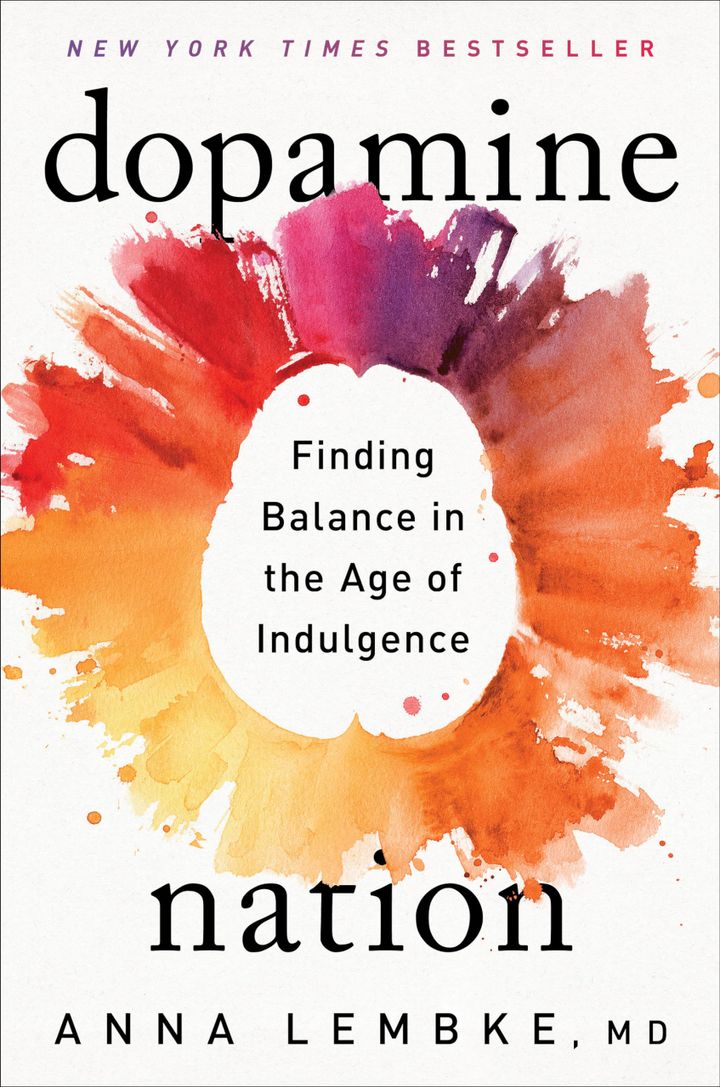
"In our modern world, we have transformed from a society of scarcity to one of overwhelming abundance. Dr. Anna Lembke argues that we are all now living in a 'digital drug store,' where high-dopamine rewards are available 24/7. The problem is that our brains are not designed for this. To stay healthy, the brain attempts to maintain a delicate balance by tilting toward pain whenever we experience intense pleasure.
If we constantly chase a dopamine hit, we eventually hit a point of diminishing returns, where the same activity no longer brings joy. Instead, we find ourselves climbing an uphill battle against our own biology. To fix this, we can’t just rely on willpower; we must tilt the scales back by practicing 'dopamine fasting.' By leaning into delayed gratification, we allow our neural sensors to reset. It’s not about living a life of misery; it’s about ensuring we don’t lose our edge in a world designed to keep us scrolling. We must learn to sit with the discomfort of boredom rather than reaching for a quick fix. Only then can we get back on an even keel."
PART 3 - The Lexical Chunks Explained
Maintain a delicate balance: To keep a situation stable where even a small change could cause a problem; keeping things level.
Dopamine hit: A sudden, short-term burst of pleasure or satisfaction (often from a notification or a snack).
Point of diminishing returns: The stage where putting in more effort or consumption yields less and less of a positive result.
Climbing an uphill battle: Definition: Struggling to do something that is becoming increasingly difficult or exhausting.
Tilt the scales: To change the balance of a situation, often to favor one side over the other.
Delayed gratification: Resisting an immediate reward in hopes of getting a more valuable reward in the future.
Lose your edge: To lose the sharpness, focus, or competitive advantage that once made you successful.
Sit with the discomfort: To allow yourself to feel an unpleasant emotion (like boredom) without trying to escape it.
A quick fix: A temporary solution that solves a problem for a moment but ignores the root cause.
Get back on an even keel: To return to a calm, stable, and balanced state after a period of excess or stress.
PART 4 - Watch Whitney share sentences using these lexical chunks:
PART 5 - Let's Practice
Choose the best answer based on the definitions above.
- If a CEO is afraid they are "losing their edge," they are worried that:
- a) They are physically tired.
- b) They are losing their sharpness and competitive advantage.
- c) They have too much money.
- When the brain reaches a "point of diminishing returns" with social media, it means:
- a) You are spending more time but feeling less happy.
- b) You are making money from your posts.
- c) Your phone battery is dying.
- Which of these is an example of "sitting with the discomfort"?
- a) Buying a new pair of shoes to feel better.
- b) Waiting in a long line without checking your phone.
- c) Taking a nap when you are tired.
- "Getting back on an even keel" suggests you are moving toward:
- a) More excitement and drama.
- b) A state of stability and balance.
- c) A total life collapse.
Complete the sentences using the correct Lexical Chunk from the list:
- Scrolling through Instagram gives me a temporary ___________, but I feel empty five minutes later.
- If you don't take a break from work, you might start to ___________ and make more mistakes.
- Trying to quit sugar in a house full of chocolate feels like ___________; it's almost impossible.
- Instead of checking my phone the second I feel bored, I’m trying to ___________.
- The first cup of coffee is great, but by the fourth cup, you reach a ___________.
- We need a long-term strategy for our health, not just a ___________ like a three-day juice fast.
- Practicing ___________ by saving money today will lead to more freedom in five years.
- After a hectic holiday season of overeating, I need to ___________ with my diet.
- Our brains always try to ___________ between feeling good and feeling bad.
- One bad habit can ___________ and make it much harder to stay productive.
PART 6 - The Same Paragraph by a NON Native Speaker
"Modern life gives us too many rewards. Dr. Lembke says our brains want to be balanced. If we have too much fun, our brain makes us feel bad to compensate. If we keep doing the same fun thing, it stops working well (diminishing returns). We need to wait for rewards (delayed gratification) and learn to be bored (sit with discomfort). This helps us feel calm and normal again (even keel)."
